

The Portugal D7 visa lets non-EU citizens live in Portugal on passive income, such as a pension, rental income, or dividends, without needing a job offer. You have to prove you earn enough to support yourself, and the minimum is tied to the Portuguese minimum wage.
It’s a common route for retirees, since pension income qualifies, but it suits anyone with steady income they don’t actively work for. After five years of legal residence you can apply for permanent residency, and citizenship becomes an option later, currently after ten years.
You apply from your home country, not from inside Portugal, and finish the process once you arrive. Get the documents right the first time, because incomplete applications get delayed or rejected.
What is the Portugal D7 Visa?
The D7 is a residence visa for non-EU citizens who can support themselves with passive income. Portugal introduced it in 2007, and it gives you the right to live, work, and study in the country. The income minimums are set out below.
It provides long-term residency status. After five years of legal residence you can apply for permanent residency. Citizenship by naturalization is a longer route: as of 2026 it takes ten years of residence, or seven for nationals of EU and Portuguese-speaking countries, and it comes with an EU passport.
Who is eligible for the D7 Passive Income visa?
The D7 is open to citizens of countries outside the EU, EEA, and Switzerland, with no restricted nationalities. EU, EEA, and Swiss citizens don’t need it; they can live in Portugal freely but have to register once they arrive.
To qualify, you need to:
- Meet the financial requirements set out below
- Be prepared to actually live in Portugal, since the D7 has minimum-stay rules (covered below)
- Have no disqualifying offenses on your criminal record
Retirees are a common fit since pension income qualifies, and you can include dependent family members on your application.

Portugal D7 visa income requirements
The D7 income minimum is tied to Portugal’s national minimum wage, which the government raises most years, so the figures change annually. The requirement works as a formula:
- Main applicant: the full annual minimum wage
- Each additional adult on the application: an extra 50%
- Each child: an extra 30%
In 2026 that comes to €11,040 a year (€920 a month) for the main applicant, €5,520 a year (€460 a month) for each additional adult, and €3,312 a year (€276 a month) for each child.
Everyone on the same application can pool their income to reach the total. A couple’s combined requirement is €16,560 a year, so two partners with pensions of around €8,300 each would qualify together, even though neither reaches the main-applicant figure alone. You should be able to show at least three months of income history.
The consulate weighs your whole application, not just the income line. A strong showing in one area can offset a weaker one, and consulates do interpret the financial requirement differently, so the same application can be approved at one and questioned at another. Including evidence of every qualifying income source, plus savings and a clear cover letter, all helps.
Our immigration partner recommends transferring at least the full income requirement into a Portuguese bank account in your name before you apply. There’s no magic number that guarantees approval, but the total requirement for everyone on the application is the floor.
Income sources that qualify
You’ll need to show the income is stable and likely to continue:
- Pension income
- Annuities
- Rental income
- Trust fund distributions
- Dividends from shares or a business you don’t actively run
- Royalties or other intellectual property income, including app store revenue
- Interest from savings
- Other regular investment income
Income from employment, including remote and freelance work, generally won’t count toward the requirement. There’s no restriction on working once you have your residence permit, but if you’re relying on a salary to qualify, the Portugal Digital Nomad visa may suit you better.
Savings strengthen your case, but it’s best to also show some form of regular income, such as a pension or investment.
Residency Requirement for the Portugal D7 Visa
The D7 comes with a minimum-stay requirement. You can’t be absent from Portugal for more than six consecutive months, or eight non-consecutive months, during each permit period. In practice that works out to:
| Permit Stage | Validity | Minimum Stay in Portugal |
| Initial D7 Visa | 2 Years | 16 months, no continuous absence longer than 6 months |
| Renewal | 3 Years | 28 months, no continuous absence longer than 6 months |
There’s some room for exceptions. Residency can be canceled if you’re absent without good reason, but a genuine reason for a longer absence can be accepted if you apply for an exception. An immigration lawyer can help you put that request together.
How to get your D7 residency in Portugal
The process runs in two stages: you apply at a Portuguese consulate in your home country, then complete it in Portugal. There are six steps.
- Open a Portuguese bank account so you can transfer funds. How much you need depends on the income requirements above.
- Apply for the D7 visa at the nearest Portuguese consulate or embassy. You can’t apply from inside Portugal.
- Once the visa is granted, you have 120 days to move to Portugal.
- Sort out accommodation, either a rental agreement or a property you’ve bought, so you have a Portuguese address. You need proof of adequate accommodation, and it needs to be solid: our partner once saw a campsite put forward as an address and advised against it, since it weakens the application.
- Attend your appointment with AIMA, the agency that handles residence permits.
- AIMA issues your D7 residence permit.
Documents you’ll need
Bring evidence of your finances plus the documents below. The exact list can vary by consulate and circumstance.
At the consulate in your home country:
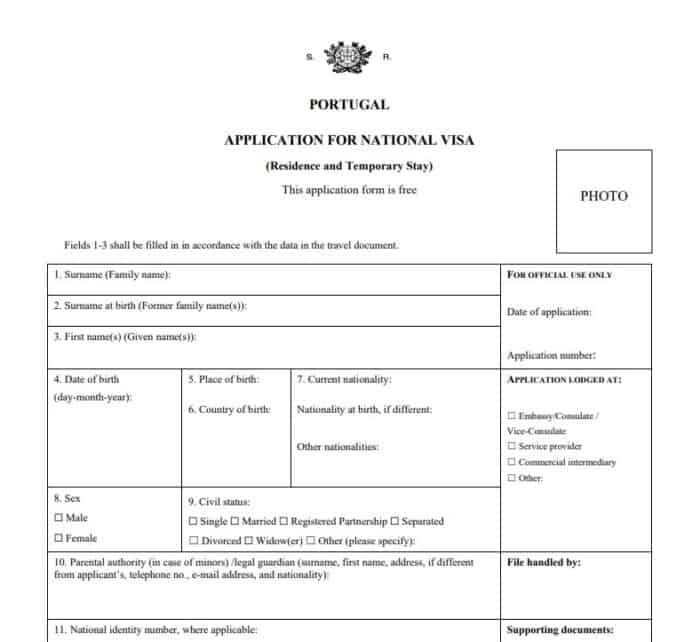
- D7 application form
- A personal letter supporting your case
- Proof of income, such as bank statements and investment certificates
- Proof of accommodation
- Copy of your passport
- Two passport photos
At your appointment in Portugal:
- Valid health insurance covering you until your residence permit is granted. Travel, private, or expat health insurance all work for this stage.
- A criminal record certificate from your home country
- Authorization for AIMA to run a Portuguese criminal record check
Provide certified translations for any document that isn’t in Portuguese. Incomplete or incorrect paperwork is one of the most common reasons applications get delayed or rejected, so it’s worth getting the file right before you submit.
Portuguese D7 visa fees
Fees vary by consulate. As a rough guide, budget around €90 to €110 for the visa, and roughly €160 to €170 for the residence permit once you’re in Portugal.
How long does the application process take?
The two stages are processed separately. The consulate stage usually takes one to three months. The full process, through to your residence card, commonly runs six to nine months, and often longer, because AIMA has been clearing a large case backlog that delays appointments and card issuance well beyond the old published timelines.
That’s separate from the gap between your visa approval and your move to Portugal for the AIMA appointment. Wait times also tend to be worse in Lisbon and Porto.
How long is the Portugal D7 visa valid?
Portugal changed the D7 permit period, and a lot of older pages still show the previous length, so this is worth getting right.
The first D7 residence permit is issued for two years. You can then renew it for three years at a time, as long as you still meet the requirements, with no limit on the number of renewals. Renewing isn’t the same as permanent residency, though, which you apply for separately.
After five years of legal residence you can apply for permanent residency. Once you hold it, you no longer need to meet the D7 income and stay conditions. Citizenship by naturalization takes longer: as of 2026, Portugal requires ten years of residence for most nationals, or seven years for nationals of EU and Portuguese-speaking countries, counted from the date your first residence permit is issued.
Portugal D7 visa renewal process
You renew in Portugal through AIMA. To renew, you’ll need to show that you:
- Met the conditions of your current permit and still qualify for the D7
- Have qualifying accommodation, either a home you own or a rental agreement
- Have a clean criminal record
Benefits of the D7 visa
As a D7 permit holder, you can:
- Live and work in Portugal
- Register with the public health service (SNS) for healthcare, once you have your residence permit
- Travel freely within the Schengen area without a tourist visa
- Get a Portuguese tax number (NIF)
- Access the Portuguese education system
- Include family members on your residence permit
- Transfer to a different residence permit while living in Portugal
There’s also no Portuguese language test at the application stage.

Portugal Retirement Visa
The D7 is one of the most common routes for retirees, because pension and annuity income both qualify toward the financial requirement. If your retirement income is passive and steady, this is usually the visa that fits.
Can I work on the Portugal D7 visa?
Yes. Once you have the D7, there’s no restriction on working in Portugal, which makes it one of the easiest European countries to move to without a job offer.
The catch is at the qualifying stage. To get the visa, you need passive income, and income from a job, including remote and freelance work, generally won’t count toward the requirement. Our partner has seen consulates accept remote or foreign employment income in some cases, but that’s the exception, not the rule.
So the D7 works well if you have a passive income stream, such as a pension, rental income, or investments, and want the freedom to work on top of that. If your income comes mainly from active work, like a remote job or freelancing, the Portugal Digital Nomad visa is usually the better fit.
You can also take a job in Portugal once you’re resident. If you do, think about where you’ll owe tax. A cross-border tax specialist can walk you through your situation, though this matters less if you’re retired and living on passive income.
What family can you include under the D7 program?
You can include dependent family members on your application:
- A spouse or de facto partner (Portugal recognizes same-sex marriages)
- Minor children
- Parents of you or your spouse, if they depend on you financially
You’ll need to show you have the resources to support any dependents, and if they have income of their own, you can count it toward your application.
If you’re already living in Portugal on a D7 permit, you can apply for family reunification to bring immediate family members over.
Switching to another residence permit
Once you’re living in Portugal, you can move from the D7 to a different residence permit. You apply for the new permit the usual way, and the process depends on which one you’re switching to.
D7 vs. the Portugal Golden Visa
Portugal also has a residency-by-investment program, the Golden Visa, which is likewise a route to citizenship. The main differences come down to money and presence.
- Cost and investment: the Golden Visa requires a substantial qualifying investment, from €250,000 for the cultural heritage route up to €500,000 for the most common option, an approved investment fund. Real estate stopped qualifying in 2023. The D7, by contrast, only asks you to show passive income.
- Time in Portugal: the Golden Visa has a very low stay requirement, around a week a year on average, which makes it more of a “Plan B” you can hold while living elsewhere. The D7 expects you to actually live in Portugal.
For most people moving to Portugal to live, especially retirees, the D7 is the usual choice. The Golden Visa tends to suit those whose main goal is to invest and keep a residency option open without relocating.
Next steps
If you meet the income requirement, the practical next steps are to identify the right consulate for where you live, start gathering your documents, and get any non-Portuguese paperwork translated and certified. The consulate weighs the whole application, so it’s worth taking the time to get every piece right rather than rushing a weak file.
Need Immigration Assistance for Portugal?
Get clear advice on the best visa, residency, or citizenship route from Anna Clara in a 30 minute consultation. She will also give you quote for further services should you want them. This could be the full end-to-end visa service, residency cards, or help to settle in.
Portugal D7 visa FAQ
Is there an age limit? The main applicant has to be at least 18. There’s no upper age limit.
Can UK citizens apply after Brexit? Yes. Since Brexit, UK citizens are non-EU, so the D7 is a common route for Britons moving to Portugal.
Do I need a lawyer? No, it’s not required. But a good Portuguese immigration lawyer can save you time and reduce the risk of a rejection, especially given how differently consulates can interpret the financial requirement.
How much should I have in a Portuguese bank account? Aim to deposit at least the full income requirement for everyone on your application before you apply, and be ready to show bank statements as proof.
Can I qualify mainly on savings? Savings strengthen your case, but it’s best to also show some regular income. If you’re relying largely on savings, get advice from a D7 specialist before applying.
Appendix A: relevant Portuguese legislation
The D7 is set out in Portuguese immigration law:
- Article 58(1) of Law no. 23/2007 of July 4
- Article 24(d) of Regulatory Decree no. 84/2007 of November 5
Together these set out the requirements, conditions, and rights attached to the visa.






Hi,
I can not see a field in the d7 application form that allows the details of the spouse. My wife has an pension well above the 100% minimum wage, whereas I have an pension above the 50% minimum (but not quite to the 100% level). How are our applications linked?
Many thanks
Am I allowed to work in Portugal on a d7 visa ?
Yes I have my passive income and everything but for example am I allowed to work in A company in Portugal as a manager or accountant?
Hi Amr. YEs, the D7 visa has no restrictions on employment while you are in Portugal.All the best, Alastair
I’m Tabish and I am planning a textile and fashion design business in Portugal.
There is no restriction on working in Portugal on the D7 visa, as long as you can show consistent income to meet the requirements. All the best, Alastair
Hi Alastair, could I use the gains from my crypto portfolio to support the passive income requirement? I also have traditional investments but would like to include my crypto portfolio since I have a large amount of money invested there.
Hi Nancy. I’ve just raised this with our partner. Their advice is that Portuguese consulates are still hesitant to recognize Crypto assets and income in applications at present. They’d be happy to assist with your application and see how your specific assets and incomes can be best presented to ensure a first-time approval. Please click here to book your D7 consultation. All the best, Alastair
problem is the required health insurance which run to 1k or more monthly.
HI Alber – Yes, you need qualifying health insurance for your D7 visa application. However, it should not cost that much unless you have some serious pre-existing conditions!!! Check out our guide to Expat Health Insurance to find the right cover at the right cost. All the best, Alastair
Hi Alistair,
Great guide. I’ve got a question for you: how can a freelancer apply for this visa if the requirement is that your income must come from a business that you don’t manage? So basically, I need to prove I get passive income, which isn’t really true. Is this an issue for the application?
Hi Ivan. I’d suggest a chat with a Portugal D7 expert – they’ll be able to help you plan an application that gets approved given your circumstances. All the best, Alastair
Hi Alastair, can one use savings to prove being able to support one’s family for the year, if the savings are more than the annual amount of the minimum wage mentioned? Any idea about this, or can savings only be used to further your case? My hope would be to find a job in Portugal at an international school once arriving.
Thanks for the conclusive article.
Hi Darryl. Yes, just savings can be accepted in some cases – please chat to our D7 Expert partners who’ll be best placed to assist with a successful application. And, yes, the D7 allows you to legally work in Portugal. All the best, Alastair
Great article! I was looking for information on D7 and this is one of the best I have read. lots of good information and enough clear details. Thank you!!!
Can I use use a B&B as a 6 month address?
Hi John. Anecdotally, some consulates may accept a B&B booking with some applications, but it can be risky. Our partner, who has many successful applications from around the world, prefers either:
a) A rental contract; or,
b) An invitation letter issued by a Portuguese citizen who is responsible for the lodging of the visa applicant, even if for a period of time so that he may arrange his own lodging when he arrives in Portugal (some embassies do not accept this).
All the best, Alastair
Is the place of residence (rental agt) provided with the visa application or after the application has been approved?
There seems to be some confusion wrt this step since other sites (including the Portuguese consulate) states that proof of residence is provided with the application.
Hi Mo. The proof of accommodation is required for the SEF visit when you are in Portugal. Regards, Alastair
Hi Alastair – Good article BTW.
This is one outstanding piece i need to resolve before my application goes in to the embassy in London next month. When I investigate the proof of rental accommodation, most sites / advice seem to say ‘minimum 12 rental agreement’ required for the application stage.
Do you have knowledge of people being accepted at the application stage with maybe an AirBnB or Flatio short term reservation ? I really dont want to commit to a 12 month rental without knowing if i will be accepted – any advice ?
Cheers Neale
Hi Neale. This is a bit of a Catch-22 request that only some consulates insist on. I’d suggest a no-obligation chat to our Spanish immigration law partners – they’ll be able to give you the best option for your personal situation. All the best, Alastair
Hi Alastair
I plan to firstly live on a campsite until I get my visa then I will buy property, is a campsite acceptable, provided I get a letter confirming I live there
Hi Chris – I’ve asked our D7 expert partner and this was their response: “We haven’t yet assisted with an application that had a campsite as proof of accommodation – nonetheless, there is no clear indication that it wouldn’t be accepted… However, our official position is that we don’t recommend it.” All the best, Alastair
Hi, which consultant firms can you recommend to help with the D7 visa application. I am based in South Africa
Hi Darrell. Our Portugal partner has an excellent track record with D7 applications – you can book a D7 consultation here. All the best, Alastair
Can distributions from an IRA be considered “income” for the D7? Technically the IRA is just another pot of money, like a savings account, but cash distributions from it can be set up as monthly deposits to a local bank. My Social Security income is only $1300/month but I have nearly half a million USD in cash assets. How literally is “income” defined? I’m concerned that my SS income may be deemed insufficient. Thanks.
Hi Brad. Income from investments are eligible for the D7 visa, and with your overall situation you should be eligible. I’d suggest a chat with our Portugal partner to frame your financial position in the best way possible for a successful application. All the best, Alastair
I had misdemeanor conviction in 1973 was told it was expunged
But showed up on my global entry application
Global Entry was initially denied , but I appealed and it was granted
Will this effect visa process?
Hi Rob. Best to chat to our Portugal partner – they’ll be able to assess the status of your specific conviction and any impact on your application. You can book a consultation here. All the best, Alastair
Regarding the recommended min income of €12,000/yr, do they require that for the term of the visa (2 years initial and 3 years renewal) or for the rest of my life? I have a small pension from work, but if combined with an IRA and a saving account, I can cover the recommended D7 visa amount for 5 years but not much more. So wonder if I’d be qualified? Thank you for the informative article.
Hi Mike. You need to show that you can cover the term of the visa. At each renewal you’ll need to show evidence that you still qualify. Our Portugal partner is a D7 expert, and will be happy to assist with the application to ensure you have the best chance of acceptance. All the best, Alastair
Hello Alastair,
Just want to clear a couple of details. 1. Given the initial visa period is for one year, does this mean we should have an adequate balance (for husband and wife) of 2 years times the amount suggested for one year? IE. about 24,000 Euro? and 2. I’m not clear on the apartment rental agreement timing because I thought I understood that part can wait until the temporary visa is issued and one has arrived to Portugal. Then, it will be possible to negotiate a rental in-person to have for the appointment there in Portugal. The reason I am confused on this though is because I saw it mentioned several times that it varies by consulate as to accepting alternatives such as a letter or an AirBnB. So, if it varies by consulate doesn’t that mean we need to have the accommodation before coming to the consulate in our home country? Who is going to sign a rental agreement with someone who isn’t even in the country and who doesn’t have a firm idea of when the contract will actually begin?
Thanks!
Hi Eric. I suggest meeting with our Portugal immigration law partners. They’ve had lots of experience with the accommodation requirements and have several strategies to meet the consulate’s standard. All the best, Alastar
Great article. Question: are you a Portuguese tax resident under this D7 visa? In other words you are tax in Portugal and not your home country for all earnings? I would prefer to be taxed in my home country and work as a freelancer in Portugal – how is this possible please?
Ho Deborah. Normally the D7 residence requirements mean that you are liable for tax in Portugal. All the best, Alastair
Sir
Can I get D7 visa
If you meet the requirements for the D7 visa then you can apply. If you are unsure of any of the details, please book a consultation with our expert Portugal immigration partner and they’ll be happy to assist with your application. All the best, Alastair
Hi
What documents(proof) are required for rental income?
Thanks,
Hi Ayman. SEF (the Portuguese immigration service) will want a convincing set of documents. Proof of ownership, bank statements, rental contracts, a report from your rental agency, tax receipts, etc could all be used as evidence. Our Portugal partner will be happy to help you choose the right approach to ensure your application is accepted. Best regards, Alastair
Hi,
If I have 12000 Euros only and apply for the visa and wont get any more money, will that be able to hold me just for that amount of the visa? So, 4 months? Or is the visa 12 months?
thanks
Hi Shannon. The visa is for 24-months, and you’ll need to show income to cover the entire period. Regards, Alastair
Great article. Are there any restrictions on where you can purchase your home in Portugal with a D7? Can you purchase in areas which will be off limits to Golden Visa applicants after Jan 1, 2021?
Thanks so much!!!
Brian
Hi Brian. You can purchase a property anywhere in Portugal on a D7 visa. The restrictions are only related to investments that qualify for the Portugal Golden Visa. Regards, Alastair
Hi,
Can I put my investment as cash in portuguese banks for 2 years (about 100000$) in order to prove for income?
Hi Mohsen. To meet the income requirement from savings account interest you’d need to earn 12% per annum on €100,000. While having savings can help your application, you should be able to show some steady income from a reliable source. Given current interest rates, a fixed-interest account may not be sufficient at present. Our Portugal partner will be happy to discuss your best way to approach the application. All the best, Alastair
Thanks dear Alastair,
I want to hire the lawer to proceed for d7. Can you introduce me one good one. And how much is the cost for lawer?
Thanks
Hi Mohsen. Please use this link to book your D7 consultation with a Portugal Immigration lawyer. The cost is €50 for the initial consultation. They’ll assess you case and give you a detailed quote before you proceed. All the best, Alastair
Hi Alastair
What is the equivalent of €12,000 to the US dollar?
I live of social security income that totals $15,300 a year, is this income enough to apply for D7 visa? Your response is appreciated. Thanks
Hi Luby. The current exchange rate (30 September) has €12,000 converting to USD$14,000 so your social security income should be sufficient for your D7 application. All the best, Alastair
Hi Alastair. Can I settle my family in Portugal on D7 while financially supporting them from my active employment abroad? I will not be able to reside in Portugal so in this case my spouse will be the primary applicant.
Hi Sam. As the primary applicant your wife will need to show qualifying income. You income being paid to her will not meet this qualification. Our Portugal Immigration Law partners will be able to advise you on the best approach. All the best, Alastair
Thanks for your meaningful description. I have spouse and 2 years child. But i don’t want to take them now. I want to take them after permanent residency. Can I apply D7 visa only for myself? I have required passive income from rental income and government savings certificate.
Hi Yeasin. Yes, you can apply for the D7 visa for yourself and move to Portugal. Once you are resident, your family can also use a family reunification permit to move to Portugal. All the best, Alastair
Hi Alastair
Thanks for the article.
I have the documentation ready to go for both myself and my wife (we’re both applying separately because we both have the income) but we also have a 5-year old son who’s a dependent.
My big concern is: How would my child be able to travel to Portugal with us on our 4-month D7? Should we get a Schengen visa for him?
Thanks for answering
Hi Roger. Dependent children can be included on your D7 application. You’ll need to show increased income level s(as per the article). Our partner will be happy to assist you with the application preparation. All the best, Alastair
I would like to apply for D7 visa at Portugal but I have a question about the source of passive income.
Can it be come from rental income in Portugal? or is it limited to overseas income?
By the way, I would like to clarify the stay requirement of D7 visa. Shall I count from 1st January of every year or the issue date of residence card?
Hi Shih. Rental income can be from property in Portugal – our partner will be able to help you complete your application to ensure success. The residency requirement is for the residency permit period. All the best, Alastair
Hi, looking to apply for the D7 visa but want to check on the private medical insurance. How long do you need to keep this in place? I see that the general policy is always valid for 1 year but is expensive and would eat into available income. Do you have to keep the private medical insurance in place for life, for the first year or for the full 5 years until residency is confirmed?
Hi Phil. You’ll need valid health insurance cover for the application, and again when you submit your renewal. Our Portuguese D7 Visa partner will be able to advise you on the best ways to minimize that cost. All the best, Alastair
My understanding was that after the residency is granted the applicant can get access to the National Health Care, thus private health insurance is no longer needed. Is it not so?
Hi Irina – that is correct. Once you have your residency approved, you can apply for public health cover in Portugal. All the best, ALastair
I am only 59 years of age and was looking to start the retirement process. I wanted to reside in Portugal I just recently sold my home and have $100K plus in Saving and I currently work as a consultant working remotely. So I can work anywhere in the world. Do we have an option for someone like myself that has income from employment and considerable savings for verification.? Please advise because I can place funds in an account to meet the requirements for a couple of years $12,000 x 3 or $36,000. Thank You for your time
Hi Kevin. Your remote income won’t count towards the D& financial requirement. And, most embassies want to see some passive income as part of the application. Our partners will advise you on the best way to show your suitability and give you the best chance for a successful application. All the best, Alastair
Very clear article. Thank you! I am hoping to retire to the Azores, not Portugal itself. (From the US.) Is the process the same?
HI Susanna. Yes, the Azores falls under Portuguese visa policy. Our partner will be happy to help with your application. All the best, Alastair
My question is would I be able to apply for the d7 in my home country ( Canada) without a rental agreement? I want to buy a flat there once the visa is approved so dont want to waste money on a 6-12 month lease. Is this possible? I am thinking if you have to show proof of residence prior to going to Portugal or when you get to your SEF appointment in Portugal. If its when you have your SEF appointment then that maybe enough time to purchase something while waiting for the appointment.
Hi Nelson. I’d recommend chatting to our D7 Law expert partners in Portugal. They’ll be able to advise you on the best approach to ensure you don’t waste money at all. You can book a consultation with them here. All the best, Alastair
How do i show my income from crypto trading ? what proof they require >? i keep my earing on crypto exchange i do not withdrawal on monthly basis mostly i reinvest ? please advise
Thanks
Hi Farrukh. Our advice from our D7 Portugal Immigration Law partner is that Portuguese consulates are not recognizing Crypto assets or income in D7 visa applications at present. Please click here to book a D7 consultation to discuss your case with them here. All the best, Alastair
Dear Alastair
thanks for your valuable comment and your replies.
I wanted to know – if I can accept a job offer from Germany and continue to work from Portugal under D7 visa.
Please do let me know.
Hi Vijay. One of the advantages of the D7 visa is that you can work in Portugal, either for a Portuguese or foreign employer. You must still meet the D7 residency requirements to renew your visa. All the best, Alastair
Hi,
I’m from the UK. I work as a freelancer but sometimes I need to attend a site to carry out inspections. This can range from a few days yo a few weeks. The sites are always within the EU. Can I still apply for the D7 visa?
Thank you
Hi Ali. On a D7 visa you can freely travel around the EU from Portugal. And, there are no restrictions on working in Portugal (either as a freelancer or as an employee) while on the D7. YOu’ll need to spend 183 days per year in Portugal to qualify for the renewal of your visa. Our D7 Immigration Law partner will be best placed to assist with your application – click the link for your no-obligation consultation. All the best, Alastair
D7 was always visa for passive income. Are there any official legal documents that something has changed and now it works for freelancers?
Hi Alex. The D7 is passive income visa. To qualify you’ll need to show a qualifying income (see this section for acceptable sources of passive income) . However, there is no restriction on working or earning an active income while in Portugal on the D7, including Freelance work for Portuguese and international clients. All the best, Alastair
Hi Alastair. So just to confirm, if your source of income is from work you wouldn’t be eligible for the D7 Visa? Myself and my partner are UK citizens but we were hoping to move to Portugal for a year or two as my job (for an international company) allows me to work wherever. Is there any visa we would qualify for?
Thanks in advance for your help.
Hi Phil. The D7 needs a source of passive income (embassies have been rejecting applications based on Remote Work income), although once you qualify there is no restriction on Remote Work. We cover a range of Portugal Visas and Residence permits in our Moving to Portugal Guide – I’d suggest checking that out to see if there are any you qualify for. Alternatively, check out our Remote Work visa guide for some other ideas. All the best, Alastair
For how long should the 12,000 euro be in my bank account before application ?
Hi Sam. The key for the D7 is to show passive income, with savings as an additional source of support for your application. Our D7 Visa experts in Portugal will explain how to best submit supporting evidence for your application. All the best, Alastair
Hi Alastair,
My husband and I are under retirement age, but my mother who lives with us, has a regular monthly pension of £1,300. We would have savings of approx £250,000 after our house sale.
Is this enough to grant us all the D7 visa? Could we be classed as mums dependants? as my husband and I would only have the savings of our house sale.
Thanks for your help Ali…
Regards
Hi Julie. The £1,300 pension will come in under the recommended €22,000 (€12,000 + 2 x €5,000) but is offset by the £250,000 you’ll have in savings from the sale of your property. Parents can apply for dependent adult children, or finances can be pooled. A chat with or D7 expert partner would be the best for you to come up with a successful application approach. All the best, Alastair
Hi Alastair,
I already booked a consultant but I wanted to ask you too. Will a high enough salary from employer outside Portugal help with getting the D7 visa if I don’t have passive income? Specifically $7000/month gross. And have savings to cover the 2 year period.
Hi Alok. Generally income from employment is not accepted for the D7 application. Best to discuss this in your consultation as the lawyers will give you the best advice on how to proceed. All the best, Alastair
Hello
As an Iranian retired family of two persons, I would like to get this kind of Visa. I am 58 and my wife is 56. Please send me some more information including the process period and the expenses. Best regards Ho. Man
Hi – The processing time is variable, and does depend on the embassy/consulate where you are submitting the application. And, the pricing will depend on the number of people on the application and the services that you want from the lawyer. Our D7 expert partner in Portugal often package the following services for clients:
• Obtaining a Taxpayer Number (remotely)
• Tax representation during the first year
• Opening of the bank account in Portugal – in the candidate’s personal name (remotely)
• Visa application – at the Portuguese Consulate in your country of origin or the country where you legally reside
• Residence Permit procedure with the Portuguese Immigration and Borders Service
You can book a no-obligation consultation with our Portuguese immigration law partner here – they’ll give you detailed information on pricing for the serives you require + an estimate time for the visa issue given your situation. All the best, Alastair
Hi my husband and I would like to retire to Portugal I have already retired and have a pension of £842.00 per month my husband is younger so will not get his state pension until 2024 but has a private pension of £370.00 per month so we have a total of£1212.00 income is this enough to get a D7 visa we own two properties in the UK so should end up with approx £450000 to £500.000 once they are sold but dont want to sell the properties if we are unable to move to Portugal
Hi Sandra. The £1,212 pension income that you have is over the legislated minimum but just under our partner’s recommended amount. However, your properties are a source of both equity and possible income (plus your husband’s future pension) which does make it much more likely you’ll be approved. Given your situation I’d suggest a chat with D7 specialist with our Portugal immigration law partner. They’ll be able to advise you on the best way to manage your application. All the best, Alastair
Hi
Thank you for all the information! I have been on many different sites reading about the D7 visa, and I have seen many different interpretations from many different sources as to what is considered a valid form of passive income.
Some say it can only be investment income, others say it encopmasses a broader range. Specifically, I have seen other information that according to article 24 of decree number 84/2007, visa applications can be made by foreign citizens living on income from movable or immovable property or, and this is the one that interests me, intellectual property.
“Os pedidos de visto efectuados por cidadãos estrangeiros que vivam de rendimentos de bens móveis ou imóveis ou da propriedade intelectual;”
I am a self-published author and earn royalties each month more than totalling the minimum monthly requirement, and as intellectual property is defined as “creations of the mind, such as inventions; literary and artistic works; designs; and symbols, names and images used in commerce”, do you think this would allow me to be considered for a D7 visa?
Many thanks!
Hi Martin. I’ve confirmed with our D7 expert partners and royalties will qualify as passive income. They’d be happy to help with your application – please see free to use this link to book your consultation. All the best, Alastair
Dear Sir / Madam
I am quite impressed with the amount of information readily available in your website pages related to retirement and investment in abroad.
I am currently researching information related to retiring in Portugal. i.e specifically D7 retirement option. I am currently 48 years old. I have the following questions:
1. Is income from Agricultural source (for example Coffee estate) is accepted as a passive stable income for D7 visa?
2. Is there a limitation on the Age of the applicant to get positive outcome on the D7 application? for example if the applicant is 50 years or old he has more advantage than younger people.
HI Ganesh. Dividends from a company that you don’t actively work for a considered passive. I’d suggest a consultation with our D7 Immigration experts to clarify your situation. The D7 visa has no age restrictions. All the best, Alastair
Hi,
Thank you so much for your informative page.
I’ve got an additional question:
Can an individual apply D7 visa if married with EU citizen?
Much appreciate for your answer in advance.
Hi. Yes, being married to an EU citizen is not an issue for your eligibility. Regards, Alastair
What happen if I am under a temporary protective status in the US which is not not a residence, can I still apply for the D7?
Hi Maine. Please book a consultation with our D7 expert partners to assess you situation. All the best, Alastair
I am hoping to set up a b&b /airbnb can I do this on a D7 and will this contribute to my passive income ?
Hi Tracey. There is no restriction on working while in Portugal on a D7 visa – however, the income from that work is not eligible for your D7 financial qualification. Regards, Alastair
Thanks for your helpful info. 2 questions:
1. You mentioned that there was a limit to the amount of times for entry and exit to Portugal. If you live in Portugal for the required 8 months over the course of the year, could you make 6-12 one week trips to the US over the course of a year? My husband will be working remotely and we won’t know how often he has to return for meetings.
2. In addition to his income, we have been renting out our main residence for the last 18 months and will continue to do so. The monthly profit exceeds the required passive income. The lease term for tenants is 1 year then month to month. The current tenants have been there for 18 months but are planning to move out in March when we will rent to new tenants. We basically have 2 tax years proving the income. Do we need to show a 2 year rental contract also?
Hi Jennifer.
1) There is a provision to communicate exits to SEF in cases where there is a valid reason, you husband’s work may well qualify. https://imigrante.sef.pt/en/direitos-deveres/
2) The tax records should be sufficient and our partners will be best placed to advise on how to present this to SEF for approval.
All the best, Alastair
Hi Alastair,
I’m still a bit confused on one point. In order to apply for the D7 visa, would 10,000 EUR be enough as a deposit in my newly opened Portuguese account? (or do I need to deposit at least the minimum monthly wage x 24 months?)
Cheers
Hi Max. Our expert D7 partner advises a minimum deposit of €8,460 for a single applicant. They can assist with opening the bank account and preparation of the application. All the best, Alastair
Hi Alistair,
I would appreciate if you could clarify the following points.
1) I’m an Australian resident. I understand that in order to be issued with a D7 visa
I need to open a bank account, in Portugal, PRIOR to applying for the visa, at
the local Consulate. Is this correct ? If so do I first have to visit Portugal, in order
to open a bank account, or can I do this remotely, which I am NOT keen on
doing.
2) When opening a bank account, in Portugal, would I not have to be able to
provide documentary evidence proving my address, in Portugal. .?
3) Due to my age, 76, the quotes I have received for Expat Insurance, despite no
pre existing issues are exorbitant and would cost circa 6-8 K€ over a 12 month
period. Rather than purchase Expat Insurance could I purchase a Local Health
Insurance policy as an alternative ? I understand that Local Health policies,
which are limited to coverage in the country of purchase are less expensive.
4) If it is possible to purchase a Local Health policy would I have to be
in Portugal, with proof of a Portuguese address at the time of purchase, or
could I purchase it prior to arrival, rather than the more expensive Expat
Insurance and present it at the Consulate when submitting my application.
Regards
Adam
Hi Adam.
1) Yes, you should have a Portuguese bank account prior to the initial D7 application. You do not need to travel to Portugal to open this account. Our D7 Expert partners in Portugal can assist with the entire process on your behalf.
2) No, there are ways of managing this remotely.
3) Yes, a local health insurance policy will be acceptable. However, there are specific requirements for the policy – please ensure the policy you choose is appropriate. Again, our partners can advise you on this requirment.
All the best, Alastair
Hi,
My parents live with me and my wife, would they be classed as dependents and could we lump all our pension incomes together to cover the required income for a D7 visa.
Hi Joe. Your parents would be eligible to be included on your application and their pension income would be considered, but the application is a bit more complex. Our D7 expert partners will be best placed to help you prepare the joint application. Please book a consultation here. All the best, Alastair
Hi,
I do work online with UK base company since last 4 years and my monthly income is more than 706 Euros and I can provide a proof of my job (job letter, Salary slips, and online bank transfers / proof of income). Can I apply for this D7 visa and from where I can download D7 visa application form. Pls advise and thank you in advance.
Hi Adnan. Your income from your job will not be eligible for the D7 application as the income must be passive. You may want to explore remote work visa options. All the best, Alastair
Hi
I am a 56 woman from lebanon . I am interested in d7 visa but the problem is when i get my pension it will be alla at once and not on monthly basis. It will be about 180000$ . Also it cannot be deposited in a lebanese bank due to the economic crisis in lebanon . So i have to transfer all to a Portuguese bank an apply for the d7 visa with my husband and 2 daughters 18 and 22 who are still studying. Is my condition accepted for d7 visa
Hi Sawsan. The $180,000 is more than the required amount, but you don’t have any passive income to support your application. Our partners will be able to assist with opening a Portuguese bank account and will be able to advise you on the best way to have your D7 visa application approved. All the best, Alastair
Thank you for this very informative article! We are a family of four looking to move from Canada to Portugal, for a different pace of life and to be closer to our families in Europe and Africa. While we do not currently have passive income, we intend to rent out an apartment and use the rental income to support our application.
We plan to do this for at least five years, but the question is: how long prior to applying for the visa do we have to have this in place? I.e. can we apply as soon as we have a rental agreement in place, or do we wait a six or twelve months to show a history of the passive income? We will also have some savings and intend to deposit at least the minimum required for a family of four into a Portuguese account, per your advice above. Thanks again!
Hi Em. SET look at your overall situation – for this reason a quick chat with our D7 expert immigration partner is the best way to plan your application for the best chance of success. All the best, Alastair
Thank you hosting this site and providing so much general and individual feedback. Currently, I am receiving money from the USA in the form of rental income. It is just barely enough to cover the D7 minimum requirements. However, I am also receiving money from a legal settlement from South Korea that will pay me monthly until 2026 similar to what the rental income does. Is it possible to include money from a legal settlement as passive income?
Thanks again!
Hi Ben. The legal settlement payments definitely meet the passive income definition, but this is something I’d suggest clearing with an experienced Portugal Immigration Lawyer to ensure your application succeeds. All the best, Alastair
Much obliged for all your advice!
My question relates to applying for the D7 with my husband- can we apply TOGETHER in ONE application(I would be the main applicant and he would be the dependent) or is a later family reunification the only way?
We wouldnt both qualify financially if we split our assets and did independent D7 applications.
Thank you!
HI Sarah. You can inculde your husband on your D7 application. All the best, Alastair
Hi Alistair,
Thank you for the comprehensive info provided. To the best of your knowledge, is there any difference in requirements when moving from Brazil to Portugal to what you have covered in your article re: D7 visa.
Many thanks in advance
Hi Gane. There are no special considerations for the D7 for Brazilian citizens. All the best, Alastair
Hi
Thanks for all of this great information!
My partner and I are looking into moving to Portugal from the UK this year, and the D7 seems ideal.
One thing I am confused about, is the accommodation. We plan to buy a house once we have residency, so will need a rental until then. Do we need to arrange a 12 month lease for accommodation before the INITIAL application at the consulate in London? Or can we do that once we arrive, before the SEF appointment?
Thanks in advance!
Hi Trudie, You need the proof of accomadation for the 1st appointment, the meeting at the consulate in your home country. All the best, Alastair
Thank you for the detailed information!
May you advise, if I have a corporation and contract w/o a termination date with my client giving me more than enough to satisfy the D-7 requirements, would the dividends I pay to myself be considered as a source of the passive income?
Thank you for the advice!
Hi Michael. Dividends are only applicable if you are not actively working for the company. All the best, Alastair
Hi Alastair,
Could you clarify at what time it is possible to register with National Health Service? Is it after 5 years on D7 or pretty much as soon as permanent D7 is granted in Portugal?
Regards,
Mikhail
Hi Mikhail. You can register once your are officially resident in Portugal. All the best, Alastair
Excellent guidance.
Please clarify the restrictions you’ve identified:
(1) There is a limit to the number of times you can leave Portugal each year. What is the specified number of times an individual can leave each year?
(2) In each year you must spend at least four months in the country. In addition, you must not spend more than six consecutive months outside Portugal. – Is the actual requirement that a minimum 183 days per year (6 months) be spent within Portugal, and the sequence of days spent in Portugal does not matter as long as 183 days per year is obtained?
Thanks!
Hi Charles. With a reminder that these rules can be interpreted differently by different consulates… Regards, Alastair
1) The hard rule is two entries into Portugal and 4 months validity for the original visa by which time you must have sorted out your residence permit.
2) No, the consecutive minimum is 183 days the non-consecutive limit is 240 days.
Hello, I am looking to move to portugal on the d7 visa in about 1 years time. I have more than the 2 years (20,000 euros) required saved up already to send to a portugese bank account but only have passive income (2-3k/month) from crypto currency at the moment. From what I understand, this will NOT be considered passive income for the d7. Now, I have a chunk of money in an ETF, would they accept if I sell about 1k every month of the ETF to prove passive ‘income’ going into my account? Thanks in advance.
Hi Fred. Income from Crypto isn’t currently accepted, and I’m not sure all consulates will consider the sale of an asset (rather than income generated from that asset) as a qualification. Our D7 Immigration Law experts would be best placed to help you submit an application that can succeed (or advise you if you should not proceed). All the best, Alastair
Hello, I hope you are well and I hope that you have not already addressed my questions, I have been researching else where and hit a wall/run out of steam, please excuse me.
a) I was under the impression that I would have to spend 6 months consecutively OR a total of 8 months un-consecutively, per year in Portugal.
b) Address requirements: I have already attended the embassy meeting. I have already showed the paper work signed by a Portuguese citizen as an invitation of habitation for a period of 1 year. Will I need to show additional proof of accomodation eg. a new rental contract?
c) I was under the impression that I could not work. I see in your article that this is actually possible. does this exclude working types of jobs such as bars ect?
Thank you very much for your article. Stay well.
Hi Angus. With the reminder that different consulates can take a different approach… Cheers, Alastair
1) yes, that is correct
2) your invitation should still be valid.
3) You are entitled to work in Portugal – there are no excluded jobs.
Hi
Do I need to deposit the passive income I receive every month into the Portuguese Bank Account?
there is a business owned by a friend of mine, I have invested money in it and I get a share of its monthly profit as an our agreement, Is that OK for my Passive income eligibility?
Hi Rohan,
Your passive income does not have to be deposited into a Portuguese bank, but you will need to collect documentation that proves the income is passive and continuous. As long as you are not actively working for the company then dividends or profit share is eligible. Our D7 immigration lawyer partner will be best placed to ensure you submit an application that will be approved. All the best, Alastair
Great article! Does USA SSD social security disability count as passive income for d7? Mine is well above the needed amount and is monthly and continuous.
Hi Ann. Yes, Social security disability payments will count as passive income for the D7 visa. All the best, Alastair
Great info, the best I came across.
I am into IT, working remotely and earning regular monthly income of around 2k euros. At the moment I have around 5k in savings. I can transfer 10k euro in a Portuguese bank account but can I use one of my family member’s savings to do this. I will be applying as a single applicant though but can I use say my family member’s money to transfer to the bank account? Will this work?
Thanks
Hi Rishi – I’d recommend talking to our D7 Portugal Immigration Lawyer – they’d be best place to advise you on how to proceed and your chances of success. All the best, Alastair
I saw this above:
“There is a minimum time you must live in Portugal. In each year you must spend at least four months in the country. In addition, you must not spend more than six consecutive months outside Portugal.”
On other sites, they seem to say that one must spend either six consecutive months in Portugal or eight non-consecutive months.
The requirement to spend six consecutive months each year could be quite constraining.
Which one is correct, please?
Thank you, Jane.
Hi Jane. Our information is correct. However you don’t need to spend six consecutive months in Portugal. You could, for example, spend 3 months in, 1 month out, 3 months in, one month out, 3 months in, one month out. All the best, Alastair
Can we start with a D7 visa and then move to a golden visa if we choose to purchase a home?
Hi Shante – yes, the D& visa allows oyu to transfer to different residency programs, including the Portugal Golden Visa. All the best, Alastair
Thank you Alistair for a super article.
My husband qualifies for the D7.
I have a large sum in savings but no passive income. I am happy to work in Portugal.
I was advised to apply for the D7 rather than the D6 reunification visa because we do not have a marriage certificate. We have been together for 6 years. We had a wedding but never filed with home affairs. If we have proof that we live together does Portugal recognize common law marraige?
Thank you for any advice you can offer.
Hi Steph. Yes, in some cases Portugal does recognise common-law relationships. I’d suggest chatting to our expert Portugal Immigration Lawyer partner – they’ll be able to advise oyu on the easiest path to Portuguese residency. All the best, Alastair
does an unmarried single person eligible for D7 visa?
Hi Irfan. Yes, you don’t need to be married to apply for a D7 visa. All the best, Alastair
Alastair,
Great article! I have read several places about the need for health insurance. What is unclear to me is how long the insurance be in place for? Since we would be eligible for the national health service once we become residents.
Thanks
Lorrie
Hi Lorrie. Yes, you’re eligible to apply for national health cover in Portugal, but only once your residency is completed. YOu’ll need cover until then. All the best, Alastair
Hi there
Just want to ask if you can help with this one, Is there a minimum period of which income should have been received or can I start my investment 2 months ago then start applying if there is proof of valid foreseeable passive income to be shown.
3. Can I get a new lease once I move there and does this need to be provided to authorities also what will happen if visa is rejected then will you still need to pay off lease or that could be amended in agreement.
4. After applying are you allowed to leave the country if you have another Schengen visa for different use or should you stay until you get D7 approved like leave passport to consulate. Thanks
Hi Armin. 1) There are no hard and fast rules here – SET wants to see that you can support yourself for the duration of your visa and your application needs to show that. 2) There are several approaches to leases for your D7 visa, and 3) yes, as long as you nmeet your residency requirements you can leave and reenter the country. To better understnad how to present your lease and income I’d suggest a consultation with our D7 expert partner in Portugal. All the best, Alastair
Hi Alastair
We have company in our country Iran (my wife and I ) and also we establish a company in Spain 2 year ago but we didn’t work with that because of Covid-19 .
We can show our company have income and also we have sallery in month.
Right now my wife and my son would like to live in Europe after 6 month.
So please tell me :
1- Can we get D7 from Portugal ?
2- can you help us about cost of life in Portugal ?
3- can you help us to get D7 and also help us to rent apartment and our kid high school and etc…
4- can you give me cost of your services ?
5- In first we can’t open bank account in Portugal because of sanction so we can’t transfer money in advance for our application, so do you have any way for our case ?
I await to hearing from you
Yours Sincerely
Benyamin Ghasemi
HI Benyamin. The d7 visa requires passive income and so income from your company probably wopn’t be eligible for the application. OUr immigration partner in Portugal would be best placed to help you with options for a move to Portugal – you can book a consultaiton with them here. Please see our Living in Portugal guide for information on schools, accomadation, and cost-of-living. All the best, Alastair
Hello, Are dividends from shares acceptable totaling £8460 per year (not £705 per month) as a source of passive income for the D7 visa? Thanks
Hi Arek – annual income is the amount used for your application. All the best, Alastair
Hi Alastair, thank you for this awesome article! Just a few questions:
1. Is it possible to apply based on sponsorship? For example, if a musician has a steady monthly income of Paypal.me or the likes (Patreon etc.).
2. If based on a rental income, for how many months backwards does it have to be reflected in the bank statements? Can the payments show on the bank statement as from Paypal?
3. Isn’t the D7 residence make one eligible for Portugal’s NHS? If yes, then the private health insurance can only last until the D7 residence gets approved by the SEF?
HI Yann. As your situation is a little different I’d strongly suggest discussing this with our D7 expert immigration lawyer partner. All the best, Alastair
Thank you for an excellent article. You mentioned that there is a limit to the number of times one can enter and exit the country under the D7RP. Please provide information on the maximum allowable number. Our intention is to be able to regularly visit our grandson in London, say spend 1 week with him every month. Also to tour other countries once ot twice a year. Is this allowed?
Hi. You have good reasons for travel; as long as you meet the residency time requirement you should not have an issue. All the best, Alastair
Hi Alastair
Great information on D7 Visa. I have few questions. I am planning on moving my spouse and 2 kids to Portugal through D7 Visa and look for job in Portugal.
1) I do have a rental property in the U.S. and it generates about $5,000 ($60,000 a year) rent a year. Do they look into expense as well or just gross income from ‘passive income’. If we count expenses (Mortgage, Insurance, Tax on that rental), it is at $1,000 a month ($12,000), which wouldn’t be enough to qualify on net income basis. So it would be great to know if it is gross income or net income for passive income.
2) Also, in addition would have about $100,000 deposited in Portugal bank and all in assets (rental, 401k, savings) of $1.2 million. Would that help if answer from question #1 is net income.
Thanks
Jay
Hi Jay. Your rental income should suffice, but the deposit will definitly help. Our Portugal D7 expert partner will be happy to assist with planning your application for the best chance of success. All the best, Alastair
Asking as a U.S. Citizen and retiree, what constitutes a Portuguese accepted “police record”? Given multiple states that may or may not coordinate with a national government, I have not idea how or how hard it would be to obtain such a legal record. Thank you in advance.
Hi Ann. Here’s information from the US state department. Alternatively, our Portugal partners have lots of experience obtaining clearance for US clients. All the best, Alastair https://travel.state.gov/content/passports/en/abroad/legal-matters/criminal-record-check.html
Hi Alistair,
I’m a retired Police Officer in the UK and on the retirement of my wife in a few years time, we will be looking for a holiday home, possibly in Portugal.
I’ve read many of the stipulations about the D7 visa, also about the new rules regarding the Golden Visa.
So with a Police Pension of approx $1800 per month I figure I should qualify for the D7, financially.
The new 2022 rules for Golden Visa purchases, limit the locations and values of property purchases in Portugal. Does this apply to the D7 visa?
I also note that with D7, you are limited to how many times I can leave Portugal, does that mean, leaving the EU area, or Portugal itself? As we would/ may need to return to UK at short notice and multiple times? Thanks Mark
Hi Mark. The 2022 changes to the Golden visa are applicable only to that program. The only changes to the D7 have been the small change to the financial requirements. So, if you are living in Portugal on a D7 visa there are no restrictions on where you can purchase a property. The main concern for your D7 renewal is that you meet the residency requirment. Short visits for a reason to the UK will not be an issue if you do. All the best, Alastair
Hi Alistair,
Thank you for an excellent article. I plan to apply for D7 which includes my wife and my parents as dependents. I assume the amount of my passive income could meet the requirement of 3 adult dependents when my wife do not have any passive income. Could you advice if I can include my wife and my parents into my application? As I read in another article says the spouse included in the application also MUST has his/her own passive income?
Hi Ryan. The total passive income you have must be enough for everyone on the application. That income can come from one or more people on the application. So, you can include your wife and parents if your income is sufficient. All the best, Alastair
Hi Alastar. Thanks for your reply. Can I have your quotation of the fees for assisting my D7 application? Will the fee covering the services of document review, bank account opening and property renting service? Many thanks.
Hi Ryan – I’ve sent an email describing the services our D7 immigration lawyer can offer. All the best, Alastair
I AM A GENERAL PRACTITIONER WORKING IN GULF COUNTRY,INTERSTED TO MOVE PORTUGAL .
FURTHER WOULD LIKE TO CONITINUE THERE AS A GENERAL PRACTITIONER,IN THIS REGARD CAN YOU GUIDE ME HOW TO ACHIEVE LICENSE TO PRATICE MEDICINE IN PORTUGAL,PLEASE.
I’ve emailed you for more details about your qualifications. Regards, Alastair
Dear Alastair,
Spainish law requires anyone who has lived in Australia in last 5 years to provide fingerprints with there Aus Police check. Is Portugal Law the same for D7 application?
many thasnks,
Juliet
Hi Juliet. There’s no specific requirement for your Australian police record to include fingerprints. All the best, Alastair
Hello Alastair,
I posted a comment yesterday but I’m not sure whether it was successful or not, so reposting. In case it’s duplicated, I do apologize.
I’m an American and an Australian citizen currently living in Brno, Czech Republic. I have passive income from my rental property in Australia and from stock investments. My annual income from just the rental property is around 31,000AUD (~21,000EUR).
I’m very interested in applying for this visa but just want to confirm whether you think this will be sufficient to succeed. This will be for my wife, my son, and my daughter. Both of my kids are under the age of 26. Can you please let me know? Thanks.
Hi Bilhar. Yes, your income should be sufficient. Be aware that only dependent children under 18 years old can be included on the application. All the best, Alastair
Can you clarify the periods you can be out of Portugal in the 2 & 3 year periods
Hi Dianne. The residency requirements remain the same from years 1 to 5. All the best, Alastair
Hello Alastair,
This my sound a bit off topic, but it will really help me to know what the actual minimum living cost is for a couple with a baby in Lisbon or porto.
Thanking you in advance
Hi Hassan – There is no simple answer to this question. Your cost of living depends on a wide range of factors. What is your accommodation, how do you manage utilities, what do you eat, and how do you spend your leisure time? We can only offer broad ranges. Our advice: hop onto property websites, online supermarkets, and Expat Facebook groups – try to recreate your lifestyle with those prices. It is a lot of work, but the only way to get a really accurate answer. Regards, Alastair
Hello — thanks for the helpful article. I am a US citizen. My wife is from Poland and is a recent US citizen. Are we able to move to Portugal as a couple and leverage her EU status? Thanks
Hi Basia. Yes, your wife can move to Portugal as an EU citizen and you have the right to live in Portugal as a spouse. Our partners will be happy to help you with all your paperwork. All the best, Alastair
https://wherecani.live/services-tools/portugal-immigration-lawyer/
Hi
Thanks for the helpful information.
After I get my portugal citizenship in 5-6 years time, how much time per year I have to spend in portugal as a minimum requirement?
Hi Eli. Once you have your citizenship there is no requirement to spend any time in Portugal. All the best, Alastair
I am 67 with passive US retirement income (SS and state pension) around $3000. I have a very small savings account (just $2000). Does this meet the qualifications or do I need to have the actual 2 years of income available in hand? Thank you in advance for your help.
Jan
Hi Jan. The consulate will look at your entire financial position, which is why our partner recommends the bank deposit and extra evidence of your ability to support yourself. As you meet the income requirement, I suggest chatting with Ana to see how best to position your financial position for a successful application. All the best, Alastair
Can I bring my dogs with me if I am moving with a D7 visa?
Hi – there are entry requirements for pets into Europe, but you can definitely bring your dogs with you on a D7 visa. Regards, Alastair https://europa.eu/youreurope/citizens/travel/carry/animal-plant/index_en.htm
Very good information indeed, could I ask couple of questions please.
1. If me (75%) and my wife (25%) have passive rental income which meets threshold combined (100%), can she apply as primary applicant and me as dependent however her income is less than mine.
2. Since we apply together, do both of us must live in Portugal for 186 days in an year ? or I can stay less than that. My employment demands 260 days outside Portugal, can I do that if she is primary applicant? She can live 6 months in a row but I can’t.
3. What could be timeline for best history of passive income, 3 months, 6 months or more?
4. Am I correct in saying that once we are granted residency, there are no limits to number of trips to in and out of Portugal!. (I understand it’s 2 visits before residency is approved)
5. Does the rejection of D7 application impacts future visa applications such as another D7 or golden visa?
6. Does Portuguese embassy in Delhi (India) has a good history of D7 visas?
Hi Kumar. Given the complexity of your application, I’d suggest a consultation with our expert D7 partner. All the best,Alastair
Hello,
Where on the D7 form do you actually add a dependent? I have looked over the form multiple times and do not see any place to add dependent information? I have passive monthly income that covers both myself and my wife which is well over the minimum threshold (about 3.5x the amount) plus $60k in savings. My wife does work remotely online but since it is not ‘passive’ income, we were not going to bother adding that information for the visa application. Thank you!
Hi my husband and I are planning to move to Portugal next year. My husband is retired military so he receives his check from them and also gets Social Security. We have an 18 year old daughter and 21 year old son who live with us and are dependent on us as they are not able to afford their own place. We are looking to buy land in Portugal and be self-sufficient on our homestead with our children. Will they be able to go with us and be counted under my husbands income or are they over the age and not considered dependent? (We added the amount and he makes more than enough to cover for them as well).
Hi Venus. As your situation is outside of a standard application, I’d suggest a consultation with our D7 immigration lawyer partner to clarify the best way to get the entire family to Portugal. All the best, Alastair
Hello,
I am a USA Retired person looking to retire as an expat in Portugal.
How will my US Social Security Pension be taxed if I am on the D7?
I also have a State of North Carolina Pension – How is that taxed on the D7?
How will withdrawals from my 401ks & my regular IRAs & my Roth IRAs b e taxed on the D7?
I see many contradictory statements in my internet research.
Can you help clarify this for me?
Thanks so much!!!
Hi,
If I submit a D7 with a spouse dependent, do they need to supply a background check document too? Even if they are not the main applicant?
Thanks!
Hi Sarah. Yes, you’ll need the check for everyone included in the application. Our Portugal partner will be happy to assist with D7 document preparation and application submission. All the best, ALastair https://wherecani.live/services-tools/portugal-immigration-lawyer/
I know that there is no age limit for the D7 visa, however, are people aged 70+ regularly granted the visa?
Hi Danny. I’ve checked with our partner, and they have a successful track record with applications of folk over 70. Ana and the team will be happy to assist. Regards, Alastair https://wherecani.live/services-tools/portugal-immigration-lawyer/
Hi, hope i’m not too late to the party. I have a forex trading account that’s been making good profit (usd 10,000 per month on average) over the last 2 years. Would that be good enough for myself, wife, child and 3 of our parents? would the brokerage statements (with my personal name) be enough for the application or do we need more?
Also, its says “dependent” parents so how do we say the parents are dependent on us?
Thank you,
Hi Linh – the party never stops here. I’ve contacted our Portugal D7 partenr with your queries. Their response was that as the income is consistant and staedy it could well be accepted. However the rest of the application and supporting evidence will be a major factor that DSEF will consider as a whole. As for parents, if they are younger than 65, their financial dependency to the main applicant has to be proven. Regards, Alastair
Thank you so much for the reply. I just realized something else that will need clarification. Does forex trading benefit from the NHR tax regime or is it considered business income?
My trading does involve a good number of trades per day. some could be very short but some could be as long as days to even weeks. the brokerage account is held abroad.
And could you elaborate on the proof of dependency for parents under 65yo?
Thanks again,
Can a main applicant with dependant mother apply together at the same time at the Portuguese embassy? What application should the dependant, elder mother , fill; d7, d6 or? There’s no space to mention a dependant’s name on the D7 visa form.
Hello,
Where on the D7 form do you actually add a dependent, mother? If a separate form is to be filled what form do I fill? I have looked over the form multiple times and do not see a place to add dependent information?
Hi, there
We are interested and seeking to D7 visa.
Currently me and my wife are living in Bucharest in Romania and we are non European citizen. Requirements of the Portuguese govt, expected yearly income are to be filled for both.
We are a bit of unclear regarding the deposit money in Portuguese bank before applying D7 visa. And how much money need to show in bank statement in this occasion?
Waiting to hearing from you.
Thank you
Regards
Atiendra dutta
Hi Atiendra. Our Portuguese Immigration Lawyer recommends depositing the at least the income requirment for the application. You can book a consultation with them here to agree the best way to have your application approved. https://wherecani.live/services-tools/portugal-immigration-lawyer/ All the best, Alastair
Hello Alastair,
I have obtained my initial 4-month D7 visa.
After my SEF interview, will I be able to travel back to the U.S. right away before receiving my residence card in the mail? My son is having a child and I would like to visit for 6 weeks to help out before returning to Portugal. Would I need to travel with the temporary resident paper issued at the SEF office after the interview?
Thank you,
Betty
Very informative.My partner and i wish to move to Portugal and have looked into visas etc.Our only concern is he has a criminal conviction going back over 20years ago.Nothing terrible and nothing ever since.Would this affect our chances of proceeding with applying for a visa?Many thanks
Hi Bridgit. A conviction is by no means always disqualifying. SET assesses the conviction, so it is worth meeting with our partner to discuss your specific situation and ensure it will pass the application process. All the best, Alastair
if the application is rejected, how do I get the money that transfer to Portugues account bank?
Hi Johnson. The bank account is in your name and the money is 100% exclusivly in your control at all times – you can always move it as required. Noone else has access to or control over your money. Regards, Alastair
Hello Alastair,
My wife and I are keen to explore the D7 visa option.
Please advise if adult children that are financially dependent on us can be included in the application
HI Alan – Kids over 18 need to be dependent on you and not working, usually because they are still studying. Our partners can advise on how best to manage the application. All the best, Alastair
Hi,
For Non-NHR applicants, what will be the Tax ratio on the income remitted to Portugal for day-to-day expenses?
I will be applying for a D7 from the U.S. and the San Francisco Consulate is my designated location to apply.
My passive retirement income from the fire department is through CalPERS (California Public Employee Retirement System) and my income exceeds the minimum monthly requirement for this visa. They also provide a guaranteed annual cost of living allowance.
Note: CalPERS is the nation’s largest public pension fund with investments in both domestic and international markets
I have no problem opening up a Portuguese savings account but not sure how much to send over. Every article read or video seen gives conflicting information about the amount that varies widely.
My concern is that I need funds to send my non-furniture belongings via a partial shipping container if my application is accepted. I am in a land locked state and the cost is unknown at this time for ground and ship transport to Houston, Texas.
So basically I am looking what would be the best way to deal with the Portuguese savings account issue. My passive income alone would cover all my expenses to live their and actually add to my savings account because I am very frugal.
Hi Alex – our partner recommends depositing as a minimum the required annual income amount so that is the minimum you should aim for. If you passive income exceeds the minimum by a long way then you shouldn’t need to deposit much more than that as your total financial situation is assessed. Our partner would be happy to assist with your application to ensure the best chance of success. All the best, Alastair