


Are you staring at a mountain of paperwork for your move abroad, with insurance terms like ‘deductible’ and ‘co-pay’ making your head spin? You’re not alone. For many aspiring expats, navigating the world of expat health insurance feels like one of the biggest hurdles. Between wondering if local healthcare is sufficient, worrying about staggering emergency costs, and fearing a visa rejection due to the wrong policy, it’s easy to feel overwhelmed. It’s a crucial decision, and the pressure to get it right is immense.
But it doesn’t have to be this stressful. We’re here to guide you. As fellow expats, we understand these concerns intimately. This guide is designed to cut through the confusion and empower you with the knowledge you need. We’ll break down the jargon, compare your options, and show you exactly what to look for. By the end, you’ll have the clarity and confidence to select the perfect policy that protects your family, meets your visa requirements, and lets you focus on the incredible adventure ahead.
Key Takeaways
- Learn the crucial difference between travel insurance and long-term medical cover to ensure you’re properly protected from day one.
- Confidently compare insurance policies by understanding the key terms and features that truly matter for your coverage abroad.
- Discover a clear, 5-step framework to help you choose the right expat health insurance plan based on your unique lifestyle and budget.
- Get a realistic idea of costs by learning the main factors that influence your premium, from your destination to your desired coverage level.
What is Expat Health Insurance (And Do You Really Need It?)
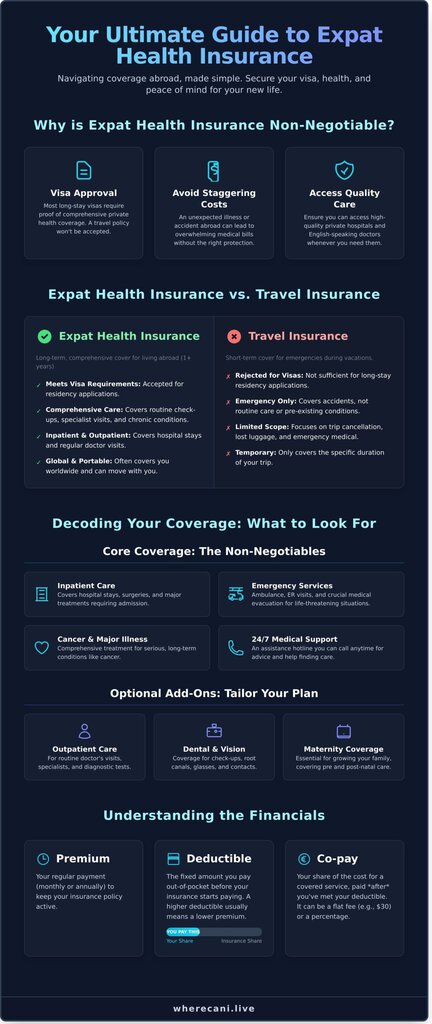
As you plan your exciting move abroad, organizing healthcare is one of the most critical steps. So, what exactly is expat health insurance? Think of it as your long-term health partner for life in a new country. Unlike a simple travel policy, it is comprehensive medical coverage designed for individuals and families living, working, or retiring abroad for a year or more.
The short answer to whether you really need it is, almost always, yes. It’s a foundational part of a secure and stress-free relocation. Many aspiring expats mistakenly believe they can immediately access their new country’s public healthcare system. However, access is often restricted to citizens or legal residents who have contributed to the system, a process that can take months. Crucially, most long-stay visas require proof of private health coverage before your application is even approved.
Beyond being a legal requirement, it’s about protecting your health and your finances. An unexpected illness or accident can result in overwhelming medical bills, turning your dream move into a nightmare. The right plan provides peace of mind, ensuring you can access high-quality care without hesitation.
Expat Insurance vs. Travel Insurance: The Critical Differences
It’s easy to confuse these two, but for your visa and your well-being, the distinction is vital. Travel insurance is for short-term emergencies during a vacation, like a lost suitcase or a broken leg. In contrast, a comprehensive expat health insurance plan is designed for long-term living, covering everything from routine check-ups and preventative care to managing chronic conditions and specialist consultations. Most countries will reject a travel policy for a residency visa application.
Local Insurance vs. International Plans: Which is Better?
While local plans can sometimes be less expensive, they often come with significant hurdles for newcomers, including language barriers and complex enrollment processes. International plans offer major advantages:
- Global Coverage: Your policy covers you in your new country, on trips to other destinations, and often during visits back home.
- Higher Standard of Care: They typically provide access to a wider network of private hospitals and English-speaking doctors.
- Portability: If you move again, you can take your international plan with you, ensuring continuous coverage.
Decoding Your Coverage: Key Terms and Features Explained
Insurance policies can feel like they’re written in another language, but understanding your coverage is the key to peace of mind abroad. How can you confidently compare plans and choose the right one for your new life? We’re here to break it down for you, making the complex simple. Choosing the right expat health insurance plan starts with knowing exactly what you’re looking for.
Let’s walk through the essential building blocks of a policy, from the non-negotiables to the personalized add-ons.
Core Coverage: The Non-Negotiables
Think of these as the foundation of your safety net. Every robust expat health insurance policy is built to protect you from significant, unexpected medical events that could otherwise be financially devastating. At a minimum, look for:
- Inpatient Care: Covers costs for hospital stays, surgeries, and major treatments that require you to be admitted.
- Emergency Services: Includes ambulance transport, emergency room visits, and crucial medical evacuation if local facilities can’t provide the care you need.
- Cancer & Major Illness Cover: Comprehensive treatment for serious, long-term conditions.
- 24/7 Medical Support: An assistance hotline you can call for advice and help, no matter your time zone.
Optional Add-Ons: Tailoring Your Plan
This is where you can customize your coverage to fit your lifestyle, health needs, and budget. Consider which of these benefits are important to you:
- Outpatient Care: For routine doctor’s visits, specialist consultations, and diagnostic tests that don’t require a hospital stay.
- Dental and Vision Care: Coverage for everything from check-ups and cleanings to major procedures like root canals or new glasses.
- Maternity Coverage: Essential if you’re planning to grow your family abroad, covering prenatal, delivery, and postnatal care.
Understanding the Financials: Premiums, Deductibles, and Co-pays
Knowing these four terms will help you understand the true cost of any plan:
- Premium: Your regular payment (usually monthly or annually) to keep your policy active.
- Deductible: The amount you pay out-of-pocket for covered services before your insurance starts paying. For example, with a $500 deductible, you pay the first $500 of costs yourself.
- Co-pay/Co-insurance: Your share of the cost after meeting your deductible. A co-pay is a flat fee (e.g., $30 per visit), while co-insurance is a percentage (e.g., you pay 20% of the bill).
- Out-of-Pocket Maximum: Your financial safety net. It’s the absolute most you will have to pay for covered services in a policy year.
How to Choose the Right Expat Health Insurance Plan: A 5-Step Guide
Navigating the world of international health coverage can feel overwhelming, but it doesn’t have to be. Finding the right expat health insurance is about matching a policy to your unique life abroad. By following a clear, structured approach, you can move forward with confidence, knowing you have the protection you need. This simple 5-step guide will help you make an informed decision.
Step 1: Assess Your Personal & Family Needs
Start by taking stock of your personal situation. Ask yourself: What is my current health status? Do I or my family members have pre-existing conditions that require ongoing care? If you’re planning to grow your family, maternity coverage is essential. Also, consider your lifestyle-an adventurous rock climber will have different insurance needs than a city-based remote worker.
Step 2: Define Your Geographic Area of Coverage
Insurers offer plans based on geographic regions. Do you need a policy that covers you worldwide, or will coverage in a specific region (like Europe or Southeast Asia) be enough? A key factor is whether you need coverage in your home country for visits. Crucially, note that including the USA in your plan will significantly increase your premiums due to its high healthcare costs.
Step 3: Set Your Budget and Financial Limits
Finding the right plan means balancing cost with coverage. First, determine a monthly premium you are comfortable with. Next, consider the deductible-the amount you pay out-of-pocket before your insurance begins to pay. A plan with a lower premium often has a higher deductible. It’s a trade-off: lower monthly payments versus potentially higher one-time costs if you need medical care.
Step 4: Compare Quotes from Reputable Providers
Never accept the first offer. We always recommend getting quotes from at least two or three different insurers to understand your options. Look beyond the price tag. How is their customer service rated? Is their claims process straightforward? A slightly more expensive plan from a provider with a reputation for excellent support can be worth its weight in gold during a medical emergency.
Once you’ve done your research, you’ll be in a strong position to choose the best policy for your new life abroad. Ready to compare?
Get free quotes from our vetted insurance partners.
How Much Does Expat Health Insurance Cost in 2026?
One of the most common questions we hear from aspiring expats is, “What will this actually cost?” While there’s no single price tag for peace of mind, we can provide a transparent look at the expected costs for expat health insurance in 2026. The final price is a blend of your personal circumstances and the choices you make about your coverage.
Think of it not as a fixed cost, but as a flexible investment in your health and security abroad. Let’s break down what influences your premium and explore some real-world examples.
Key Factors That Determine Your Premium
Your insurance premium is tailored to you. Insurers assess risk based on several key factors, with the most significant being:
- Age and Health Status: Younger individuals with no pre-existing conditions typically receive lower premiums.
- Area of Coverage: A plan that includes coverage in high-cost countries like the USA will be significantly more expensive than one that excludes it.
- Level of Coverage: A basic plan covering only inpatient hospital stays will cost less than a comprehensive plan that includes outpatient care, dental, and vision.
- Deductible and Co-payment: Choosing a higher deductible (the amount you pay out-of-pocket before insurance kicks in) will lower your monthly premium.
Example Costs for Different Scenarios
To make these numbers more concrete, here are some estimated monthly costs for common expat profiles. Please note these are projections for 2026 and can vary based on the factors above.
- A single digital nomad (30s) in Southeast Asia: With a mid-level plan excluding the USA, they might expect to pay around $150 – $250 per month.
- A retired couple (60s) in Portugal: For a comprehensive plan offering solid coverage in Europe, their combined cost could be $400 – $700 per month.
- A family of four (parents in their 40s) in the UAE: A robust family plan with worldwide coverage (excluding the USA) could range from $800 – $1,500+ per month.
Tips for Making Your Policy More Affordable
You have more control over the cost of your policy than you might think. Here are a few practical ways to manage your premium without sacrificing essential coverage:
- Opt for a higher deductible. If you are generally healthy and can cover smaller medical expenses yourself, this is a great way to lower your monthly payments.
- Exclude high-cost countries. If you don’t plan to travel to or live in the USA, choosing a “Worldwide excluding USA” plan can reduce your premium by up to 50%.
- Pay annually. Many insurers offer a discount of 5-10% if you pay for your entire year’s premium upfront.
- Review your plan yearly. Your needs change. A yearly review ensures you aren’t paying for coverage you no longer require.
Finding the perfect balance of coverage and cost is key to a successful life abroad. At Where Can I Live, we help you navigate these choices by connecting you with our vetted insurance partners to find a plan that truly fits your journey.
Secure Your Peace of Mind for the Adventure Ahead
Moving abroad is an exciting new chapter, and navigating healthcare shouldn’t cast a shadow on your dream. As we’ve covered, understanding your coverage options and knowing how to compare plans are the most critical steps. The right expat health insurance isn’t just a policy; it’s your safety net, ensuring you can embrace every new experience with complete confidence and peace of mind.
Feeling ready to find your policy but not sure where to start? We’ve been there. As fellow expats, we’re here to offer expert guidance. We do the hard work for you, meticulously vetting our partners for outstanding service and fair pricing. Let us help you compare transparent, no-obligation quotes to make the best choice for your new life.
Find the right coverage for your move. Get personalized quotes from our trusted partners.
Your adventure is waiting. Go and live it, fully protected and worry-free.
Frequently Asked Questions About Expat Health Insurance
Do expat health insurance plans cover pre-existing conditions?
This is a common and important question. Coverage for pre-existing conditions varies widely among insurers. Some plans may exclude them entirely, while others might offer coverage after a ‘moratorium’ period where you’ve been treatment-free. A few may cover them immediately for a higher premium. The most important step is to be completely honest and declare all conditions during your application. This transparency ensures you get the right coverage and avoid claim denials later.
Can I be covered by my expat health insurance when I travel back to my home country?
Many comprehensive expat health insurance policies do offer coverage for trips back home, but it’s often an optional benefit. This coverage typically has limits, such as being valid for up to 90 days per trip or per year. It’s designed for temporary visits, not for seeking regular treatment. Always check the specific ‘home country coverage’ details in your policy documents to understand exactly what is included and what limitations apply.
How do I make a claim when I’m living abroad?
Insurers make this process as smooth as possible. For routine visits, you usually pay the doctor and then submit the invoice and a claim form through an online portal or mobile app for reimbursement. For major procedures or hospital stays, it’s best to seek ‘pre-authorization.’ This allows the insurer to confirm coverage and often arrange direct payment with the hospital, saving you from large out-of-pocket expenses. It’s a simple step that provides great peace of mind.
What happens if I need to be medically evacuated?
Medical evacuation is a critical feature, especially if you’re in a remote area. If you face a serious medical emergency and local facilities are inadequate, this benefit covers the cost of transporting you to the nearest center of medical excellence. This can include medically-equipped flights and professional escorts. It’s a vital safety net that prevents catastrophic costs and ensures you get the best possible care, no matter where you are in the world.
Is mental health and therapy covered by international health insurance?
Absolutely. Acknowledging the importance of mental well-being, many modern international health insurance plans now include coverage for mental health support. This can range from sessions with therapists and psychologists to inpatient care for more serious conditions. The level of coverage can differ greatly, so if this is a priority for you, be sure to carefully review the policy details to find a plan that meets your specific needs and offers robust support.
Do I need to have a policy in place before I apply for my visa?
For many countries, this is a non-negotiable part of the visa process. Residency applications, such as Spain’s Non-Lucrative Visa or Portugal’s D7 Visa, explicitly require you to show proof of a comprehensive private health insurance policy. The policy must meet specific government requirements, so it’s crucial to purchase it *before* your visa appointment. Remote workers relocating to Portugal should also be aware that the Portugal Digital Nomad Visa (D8) carries its own 2026 income thresholds and document requirements that directly affect which insurance policy you’ll need to present. This is particularly important for Americans in Europe who are navigating the complex visa requirements and bureaucratic processes that come with establishing residency in European countries. Having the right coverage in hand is a key step toward a successful application and a smooth move abroad.