


Dreaming of your new life in another country, but feeling the weight of the logistics? If the thought of packing up your life, navigating customs, and trusting strangers with your treasured belongings feels overwhelming, you are not alone. The journey of international moving is filled with questions: How much will it really cost? Who can I trust? What if something goes wrong?
For instance, when looking at movers in the Asia-Pacific region, you might come across a company like Asiatic International Relocation that showcases these very accreditations, giving you a tangible example of what to look for on a mover’s website.
Take a deep breath. We are here to guide you. As fellow expats, we’ve navigated this process ourselves and have helped countless others do the same. This comprehensive guide is your step-by-step plan for a smooth move abroad. We’ll show you how to choose the best international moving company, understand the pricing so there are no surprises, and avoid the common pitfalls that can cause stress and delays. Let’s transform this challenge into the exciting first chapter of your new adventure.
Key Takeaways
- Break down your move abroad into manageable stages with a clear, step-by-step overview of the entire process.
- Discover the key factors that determine your moving costs, empowering you to budget effectively and avoid surprises.
- Confidently select a reliable partner for your international moving needs using our expert vetting checklist.
- Protect yourself by learning to recognize the common warning signs of fraudulent movers and moving scams.
The International Moving Process: A Step-by-Step Overview
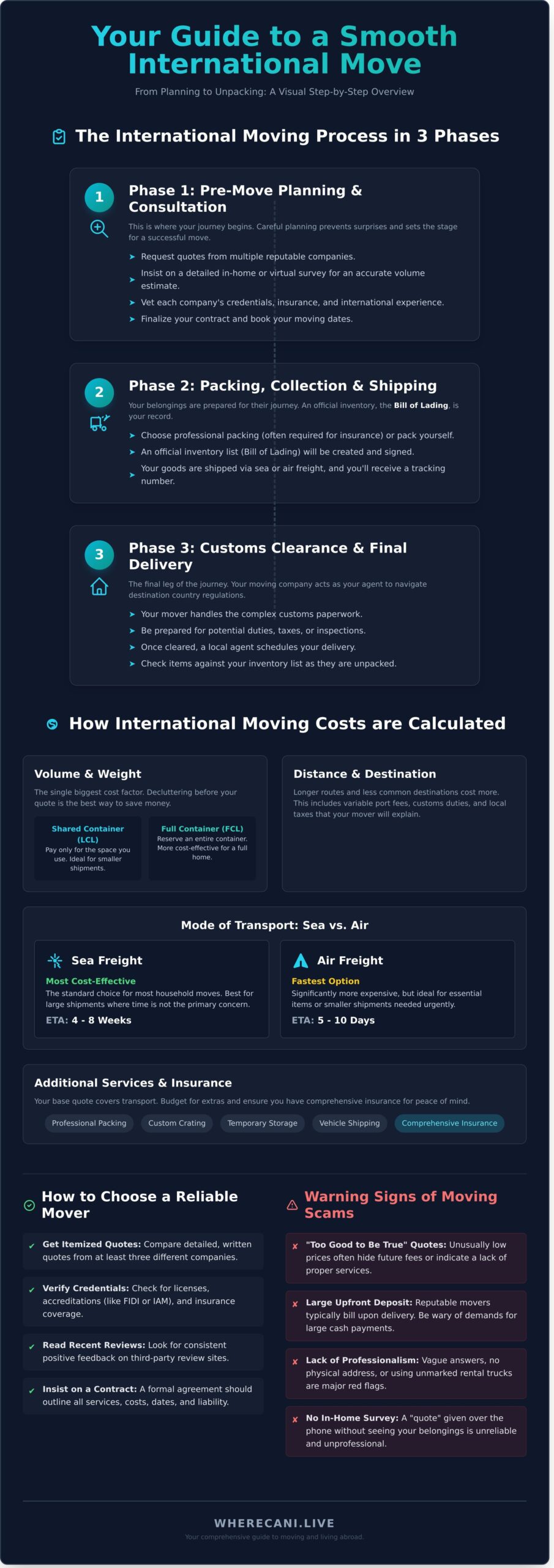
Embarking on an international move is an exciting new chapter, but the logistics can feel overwhelming. Don’t worry, we’re here to guide you. By breaking the journey down into clear, manageable phases, you can transform stress into confidence. Understanding this step-by-step process is the key to staying organized and ensuring a smooth transition to your new home abroad.
Phase 1: Pre-Move Planning & Consultation
This is where your journey truly begins. The first step is to request quotes from several reputable companies. Insist on a detailed in-home or virtual survey to get an accurate estimate of your shipment’s volume-this avoids surprises later. When comparing quotes, look beyond the price. It’s crucial to vet each company’s credentials, insurance coverage, and familiarity with international moving industry regulations. Once you’ve chosen your trusted partner, you’ll finalize the contract and book your moving dates.
Phase 2: Packing, Collection, and Shipping
Next, it’s time to get everything ready for transit. You can choose between professional packing services-often required for insurance purposes-or packing yourself. Either way, a detailed inventory list, known as the Bill of Lading, will be created. This document is your official record. Your belongings will then be shipped via sea or air freight.
- Sea Freight: More cost-effective for larger shipments, but takes longer (typically 4-8 weeks).
- Air Freight: Faster and ideal for essential items, but significantly more expensive.
Most companies provide a tracking number so you can monitor your shipment’s progress and have peace of mind.
Phase 3: Customs Clearance and Final Delivery
The final leg of your international moving adventure involves navigating customs. Your moving company will act as your agent, handling the complex paperwork required for clearance in your destination country. Be prepared for potential duties, taxes, or inspections, which vary by country. Once your shipment clears customs, the local delivery agent will contact you to schedule a delivery date. Upon arrival, carefully check your items against the inventory list as they are unpacked to ensure everything has arrived safely.
How Much Does International Moving Cost? Key Factors Explained
One of the first questions on your mind is likely, “What will this adventure cost?” The truth is, the price of an international moving project can vary dramatically. Understanding the key factors that influence your final quote is the first step toward creating a realistic budget and making your dream move a reality without any financial surprises. Let’s demystify the costs together.
Volume and Weight of Your Belongings
The single biggest factor is how much you’re taking with you. Movers typically calculate your shipment’s size in cubic feet or meters. This is why decluttering before you request a quote is one of the most effective ways to save money. For shipping, you’ll choose between:
- Shared Container (LCL): Ideal for smaller shipments, you pay only for the space you use.
- Full Container (FCL): You reserve an entire container, which is more cost-effective for a full family home.
Distance and Destination Country
Where you’re moving from and to plays a huge role. Longer shipping routes and less common destinations naturally cost more. But it’s not just about mileage. Each country has its own port fees, customs duties, and local regulations that can impact the price. A reputable mover will explain these potential charges upfront.
Mode of Transport: Sea Freight vs. Air Freight
You have two main options for getting your goods across the globe. Sea freight is the standard for most household moves-it’s significantly more affordable but takes several weeks. Air freight is much faster, often taking just days, but it is also substantially more expensive. Many expats use a combination, sending essential items by air and the rest by sea.
Additional Services and Insurance
Your base quote covers transportation, but don’t forget to budget for extras. Services like professional packing, custom crating for fragile art, temporary storage, or shipping a vehicle will add to the total. It’s also vital to discuss insurance options. While basic liability is often included, comprehensive coverage offers true peace of mind. Getting a detailed, itemized quote helps you understand every charge and avoid moving fraud from companies that hide fees in the fine print.
How to Choose the Best International Moving Company: A Vetting Checklist
When you’re planning a move abroad, choosing your moving partner is one of the most significant decisions you’ll make. Not all movers are created equal, and the success of your relocation often hinges on finding a reliable, professional team. The world of international moving is complex, governed by regulations and standards that demand true expertise.
Think of this checklist as your guide to due diligence. By focusing on credentials, insurance, and real customer feedback, you can confidently select a company that will protect your belongings and simplify your journey. Let’s demystify the vetting process and empower you to make the best choice.
Check Credentials and Accreditations
Legitimate international movers are proud of their professional affiliations, as these prove they meet high industry standards. Start by looking for the FIDI Accredited International Mover (FAIM) certification, which is a globally recognized quality standard. Also, verify their membership in major associations like the International Association of Movers (IAM). Given the complexities of global logistics, which are overseen by bodies like the International Organization for Migration (IOM), it’s crucial that your mover also holds the proper licenses for international shipping and customs brokerage.
Understand Insurance and Liability Options
Protecting your valuables during transit is non-negotiable. Movers typically offer two types of coverage: basic liability (often minimal) and full-value protection, which covers repair or replacement. Don’t hesitate to ask direct questions:
- What does your policy cover and, more importantly, what does it exclude?
- Is there a deductible?
- What is the process for filing a claim if something is damaged or lost?
Understanding these details upfront will prevent stressful surprises later.
Read Reviews and Ask for References
A company’s reputation is one of its greatest assets. Look beyond the glowing testimonials on their website and search for independent reviews on platforms like Google, Trustpilot, or expat forums. Pay close attention to how the company responds to negative feedback-a professional and proactive response is a great sign. For added peace of mind, ask the company for references from past clients who completed a similar move.
Get Everything in Writing
Never rely on verbal promises or quotes. Your agreement should be a comprehensive, legally binding contract that leaves no room for ambiguity. Before signing, ensure it details all services, a complete cost breakdown (including potential extra fees), and firm pickup and delivery dates. You should also receive a Bill of Lading (your contract with the carrier) and a detailed inventory list. Review these documents meticulously to ensure they are accurate. Taking this final step is your ultimate protection.
Ready to find a partner you can trust? We’ve done the hard work for you. Get free quotes from our network of vetted movers.
Warning Signs: How to Spot and Avoid International Moving Scams
Your move abroad should be an exciting new chapter, not a source of financial stress. While the vast majority of movers are hardworking professionals, rogue operators do exist, and protecting yourself is about knowing what to look for. Think of it as your first smart move: spotting the red flags can save you from a nightmare scenario. Remember the golden rule: if a deal for your international move seems too good to be true, it almost certainly is.
We are here to help you navigate this. Let’s explore the most common scams and how to sidestep them.
The ‘Too-Good-to-be-True’ Low-Ball Quote
This is the classic bait-and-switch. A fraudulent company offers an incredibly low price over the phone or via email without ever seeing your belongings. On moving day, once your possessions are loaded onto their truck, the price suddenly skyrockets with unforeseen fees. To avoid this, always insist on a detailed, in-person or virtual video survey that results in a binding written estimate. A reputable company needs to see what they’re moving to give you an accurate quote.
Large Upfront Deposits and Cash Demands
Be extremely wary of any mover who demands a large upfront deposit or insists on being paid in cash. Professional moving companies have established lines of credit and don’t need significant funds from you to begin the job. While a small deposit is standard, it should never be a huge percentage of the total. For your protection, always pay with a credit card. This provides a layer of fraud protection and a paper trail that cash payments simply don’t offer.
Lack of Professionalism and Documentation
A legitimate business looks and acts the part. Your instincts are valuable here. Watch for these clear warning signs that you might be dealing with a less-than-reputable operator:
- No Physical Address: Their website lists no verifiable business address or only a P.O. box.
- Unprofessional Equipment: They show up in a rented van or an unmarked truck, not a company-branded vehicle.
- Vague Answers: They can’t or won’t provide you with their license number, insurance information, or professional accreditations.
- Generic Paperwork: The contract and other documents have no company letterhead or clear business details.
A trustworthy partner in your international moving journey will be transparent and professional at every step. This is why we meticulously vet every partner we recommend at Where Can I Live, connecting you only with companies that have a proven track record of service and reliability.
Preparing for Your Overseas Move: A Practical Checklist
You’ve chosen your moving company, and the dream of living abroad is becoming a reality! Now comes the practical part. From our own experience moving across six countries, we know that thoughtful preparation is the secret to a smooth and successful international moving experience. This isn’t just about packing boxes; it’s about taking control of the process so you can focus on the exciting adventure ahead. This simple checklist will help you get organized and ensure no crucial details are missed.
Declutter and Downsize Your Home
Start this process much earlier than you think you need to. Deciding what to bring versus what to leave behind is a significant task. Go through your home room by room and sort items into four categories: ship, sell, donate, or discard. Remember, every single item you ship adds to the volume and weight of your consignment, which directly impacts the cost. Being ruthless now will save you money and simplify your new life abroad.
Create a Detailed Home Inventory
A home inventory is a non-negotiable step. Create a detailed list of every item you plan to ship, noting its condition and estimated value. For valuable or fragile items, be sure to take clear photos or a short video. This list is essential for several reasons:
- It provides a clear record for your moving company’s bill of lading.
- It is crucial documentation for your moving insurance claim, should you need it.
- It helps you keep track of your belongings and ensure everything arrives safely.
Your inventory is a vital document for both you and your chosen international moving company, providing peace of mind throughout the journey.
Pack a ‘First Day’ Essentials Box
Imagine arriving in your new country, tired from travel, only to find your main shipment won’t arrive for a few days or weeks. This is where an essentials box-or suitcase-saves the day. Pack it with everything you’ll need immediately upon arrival: toiletries, prescription medications, a few changes of clothes, phone chargers, and basic kitchen items like a mug and coffee. Most importantly, all critical documents must stay with you. This includes passports, visas, birth certificates, and your moving contract. Never pack these in your main shipment. If you’re relocating to Europe as a remote worker, for example, understanding the requirements for the Portugal digital nomad visa well in advance will ensure you have the right documentation ready before your moving day.
By following these steps, you’re not just packing your belongings; you’re setting the stage for a seamless transition. For more expert guides and resources to make your move abroad easy, explore our full suite of tools at Where Can I Live.
Embark on Your New Chapter with Confidence
Moving to a new country is a monumental step, but with the right knowledge, it can be an exciting journey rather than a stressful one. By understanding the core process, anticipating the costs, and knowing how to choose a trustworthy partner, you have built a strong foundation for success. The key to a smooth international moving experience lies in diligent preparation and having the right team on your side.
As serial expats who have moved internationally to 6 countries, we know that finding a reliable mover is the most critical part. We’ve done the hard work for you, saving you hours of research and giving you peace of mind. We only partner with accredited and insured moving companies. Take the guesswork out of the process and start your journey with confidence. Get Free, No-Obligation Quotes from Vetted International Movers and compare your options in one easy place.
Your new life abroad is waiting. Here’s to a smooth move and the incredible adventure that lies ahead!
Frequently Asked Questions About International Moving
How far in advance should I start planning my international move?
For a smooth international moving journey, we recommend starting your planning at least three to six months in advance. This gives you ample time to research and vet companies, declutter your home, and gather essential documents. Starting early transforms a potentially stressful process into an exciting and manageable step toward your new life abroad. It ensures you have the time to make informed decisions without feeling rushed or overwhelmed.
What items are typically prohibited from being shipped internationally?
Most movers prohibit items that are hazardous, perishable, or legally restricted. This typically includes flammable liquids like paint or aerosols, perishable foods, plants, and soil. Country-specific regulations also restrict things like firearms, certain medications, and cultural artifacts. Always ask your moving company for a detailed list of prohibited items for your specific destination to avoid any costly delays or legal issues at customs.
How does customs clearance work and do I need to be present for it?
Customs clearance is the process where officials in your destination country inspect your shipment’s paperwork and, occasionally, its contents. Your moving company and their local agent will manage this process for you. You typically do not need to be physically present. However, you must provide them with crucial documents like a copy of your passport, visa, and a detailed, signed inventory list (packing list) for them to act on your behalf.
Is moving insurance necessary and what does it cover?
Yes, moving insurance is absolutely essential for an international move. While professional movers are careful, transit involves many stages where things can go wrong. Standard liability often covers very little. A comprehensive marine insurance policy protects the full value of your belongings against loss or damage during the entire journey, from your old home to your new one. This small investment provides invaluable peace of mind for your big adventure.
Should I pack my own boxes to save money on an international move?
While it may seem like a way to save money, we strongly advise against packing your own boxes. Most moving companies will not insure boxes packed by the owner due to the risk of improper packing. Furthermore, customs officials are more likely to inspect self-packed boxes, causing potential delays. Professional packing ensures your items are secure, properly inventoried, and compliant with international shipping standards, making the entire process smoother.
What’s the difference between a moving company and a freight forwarder?
A moving company typically offers a comprehensive, door-to-door service. They handle everything from professional packing at your origin to unpacking at your destination, including managing customs clearance. A freight forwarder, on the other hand, specializes in arranging the transportation of goods between ports or airports. They are a logistics expert but usually don’t provide the hands-on packing and unpacking services essential for a household move.
How can I track my shipment once it has left the country?
Reputable international moving companies make it easy to track your shipment. Once your belongings are on their way, you will typically receive a unique tracking number or access to an online portal. This system allows you to monitor key milestones in your shipment’s journey, such as its departure from port, arrival in the new country, and customs clearance status. It’s a reassuring feature that brings transparency to the entire process.